Blog / Learning notes
Sample note: what I am using PHP for
September 20, 2026
2 min read
Sample article
Sample article. This note demonstrates the blog layout. It is not a published achievement.
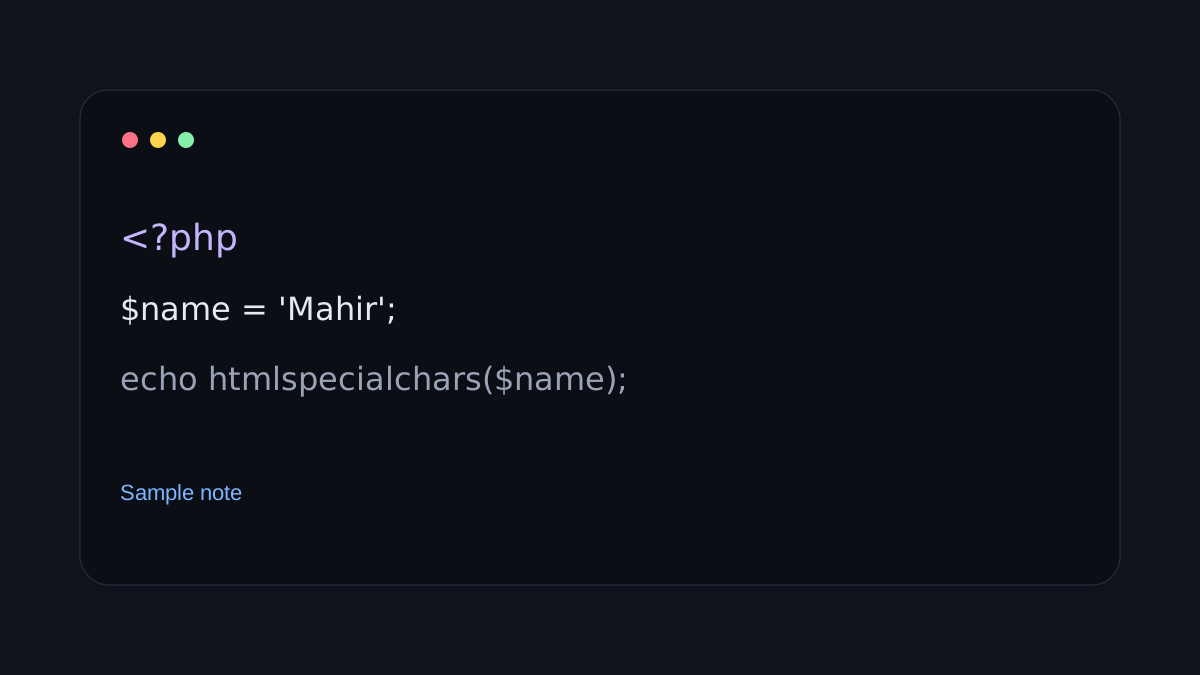
This is a sample article. It shows the reading layout, a code block, and tags. It is layout practice, not a client case study.
A small PHP example
I am Mahir Faysal, a web developer in Bangladesh. PHP is how a page can receive a form and store a message.
The example below only prints a name. It is not a login system.
<?php
$name = 'Mahir';
echo htmlspecialchars($name, ENT_QUOTES, 'UTF-8');
What I want to remember
- Escape text before it is shown on a page.
- Keep secrets out of code that will be published.
- Say clearly when a post is only a sample.
// note
How to read this note.
The banner at the top is the important line. This article is sample layout practice. It shows how a post looks on the site. It is not a tutorial I am publishing as a finished explanation, and it is kept out of the sitemap.
If a sentence is wrong, say so from the contact page and name this title. Drafts never appear here. Related notes, when they exist, are other published posts, and the same sample rule applies to each of them.
Related notes
Learning notes
Notes from building Kinetica, a browser design and animation editor: one canvas renderer for editor, previews and exports, timeline keyframes and undo.
October 2, 2026 · 5 min read
Learning notes
How I built StudyPilot to run fully in the browser with localStorage, a drag-and-drop dashboard and a rule-based planner that picks what to study today.
October 2, 2026 · 5 min read
Learning notes
How I built Quizwright so the Gemini API key never reaches the browser: one Next.js server route, a server-only import, Zod checks and a single retry.
October 2, 2026 · 5 min read